
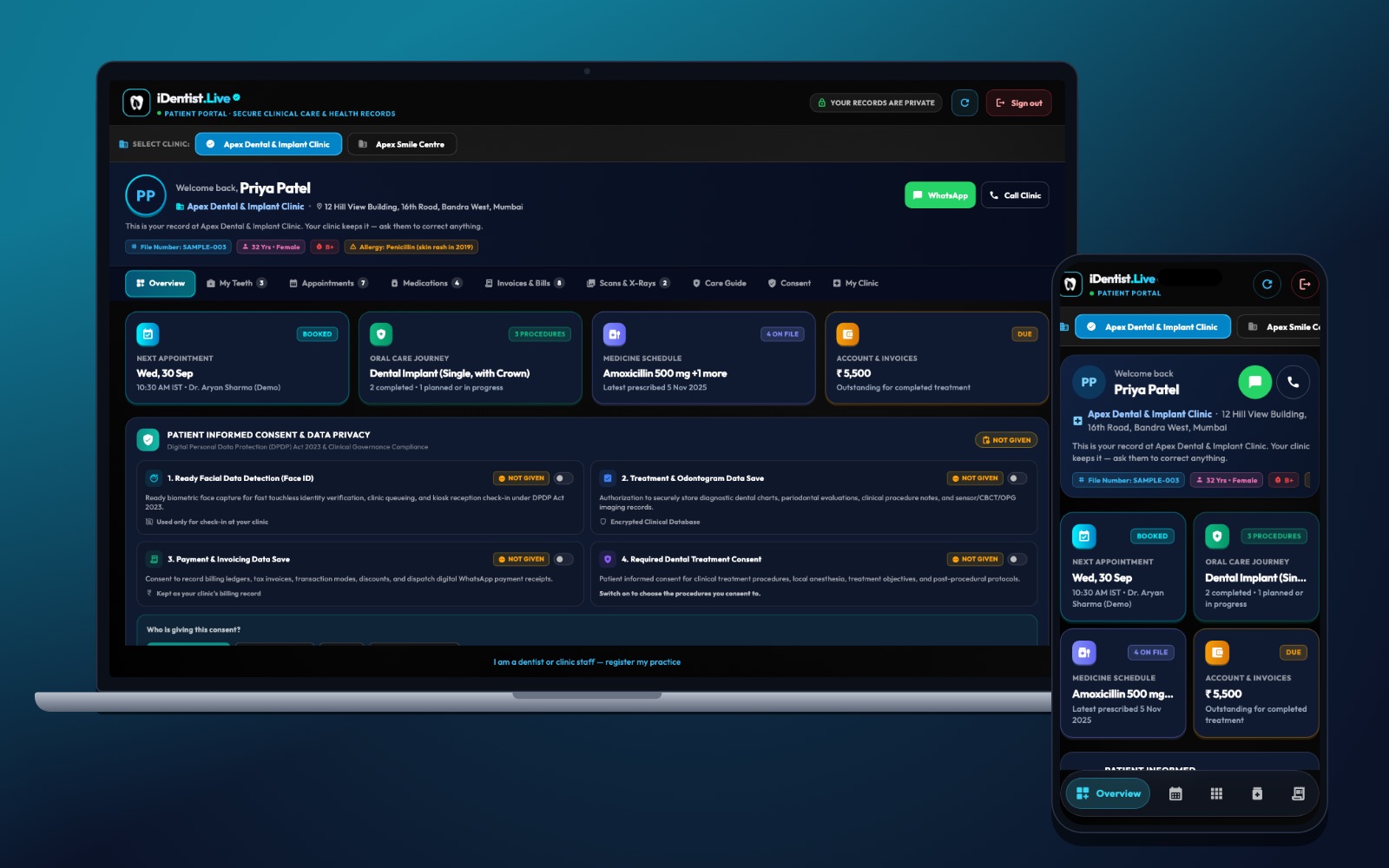
Patients come back when they understand their oral health, trust the team, and can book the next visit without hassle. iDentist.Live connects the appointment book, treatment records and the patient’s own portal, so the next visit is planned with context — not with a generic reminder.
Explain the next step before the patient leaves, book the next visit while it is fresh, base recall on the patient’s condition, follow up kindly, make rebooking easy, keep track of unfinished plans and listen to feedback.
Retention is part of good care
Keeping patients is not a marketing trick. People return when they understand what is happening in their mouth and feel looked after. “Seven habits” here means seven things your team can do every day.
The right recall time depends on each patient’s condition and the dentist’s judgment. A standard “every six months” message is not a care plan.
The seven habits
- Explain the next step before the patient leaves. Give a short summary: what you found, what you did, what to watch for and when to come back. Leave time for questions.
- Book the next visit while it is fresh. Offer dates before the patient walks out. If they are not ready, note why and ask if you may contact them later.
- Base recall on the patient’s needs. Write down why the review is needed — gum monitoring, a filling check — and agree the timing with the treating dentist.
- Follow up kindly. After a procedure, check in when it makes sense. Send any worrying symptoms to a dentist quickly; an automatic message is not triage.
- Make rebooking easy. Give clear ways to contact you and reply quickly. For a missed visit, offer help, not blame.
- Keep track of unfinished plans. Keep a list of treatment that was accepted, delayed or declined, with the reason. Explain benefits, risks, options and cost without pressure.
- Listen to feedback. Ask if timings, costs, access and explanations were clear. Change one thing at a time.
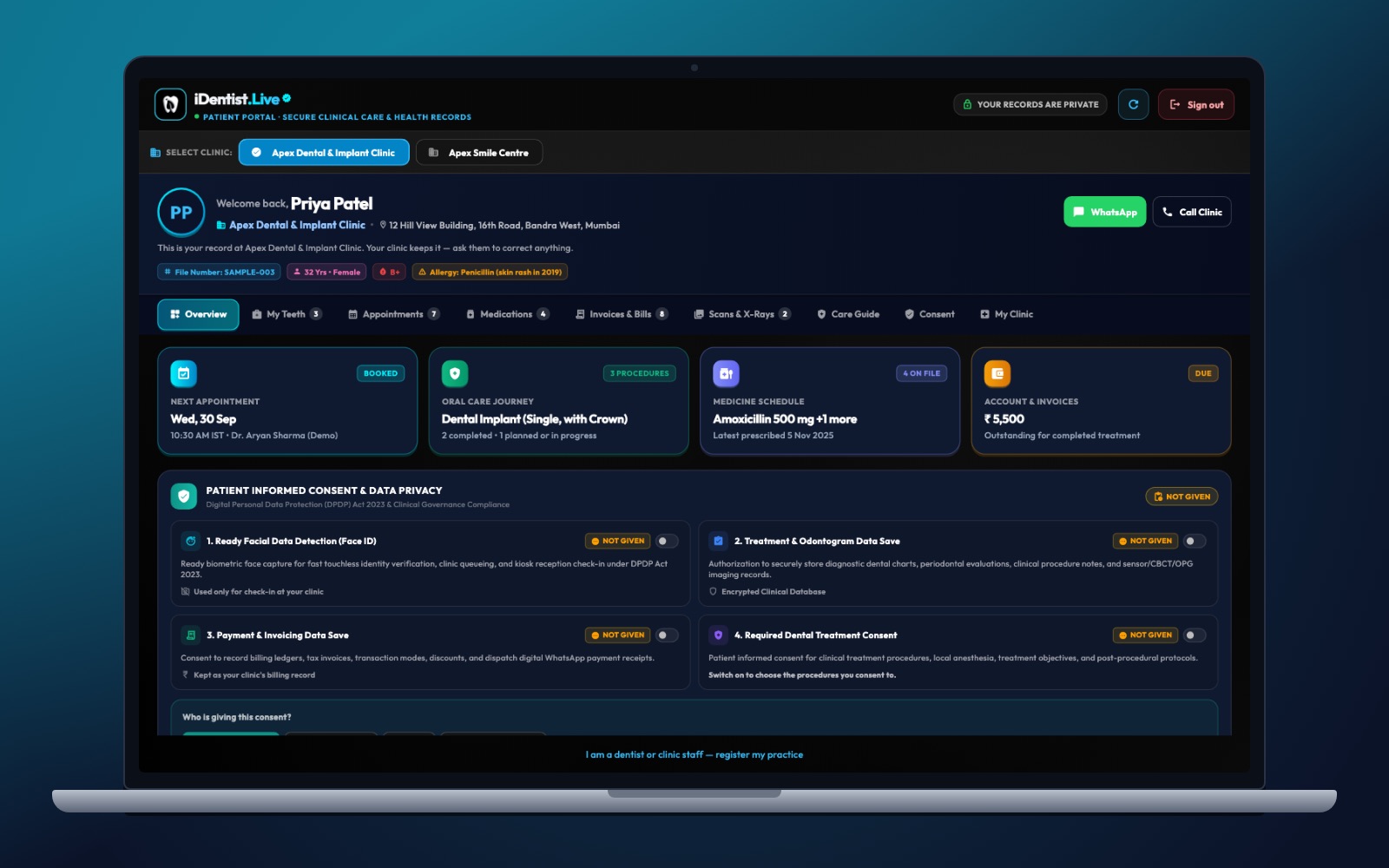
The real iDentist.Live screen, with demo data — no real patients.
How iDentist.Live helps
The clinic dashboard and the patient portal are two sides of the same journey. Your team sees whether a review was booked and whether the patient replied. The patient sees their appointments, bills, X-rays and care advice in a place they understand. Because the everyday tools are free, even a small clinic can build a good recall routine without buying another program.
- One patient story: check past visits before inviting someone back.
- Easy booking: appointments sit next to today’s patient list.
- Patients take part: they see their own appointments and care in the portal.
- No record limit: keep years of care with no cap on patients.
A real example
After a gum check-up, the dentist recommends a review in a set number of months and notes why. The front desk offers dates and sends a reminder the way the patient prefers. The patient replies that a work trip clashes, so the slot is freed and a new date is offered. The record shows “rescheduled”, not “lost patient”.
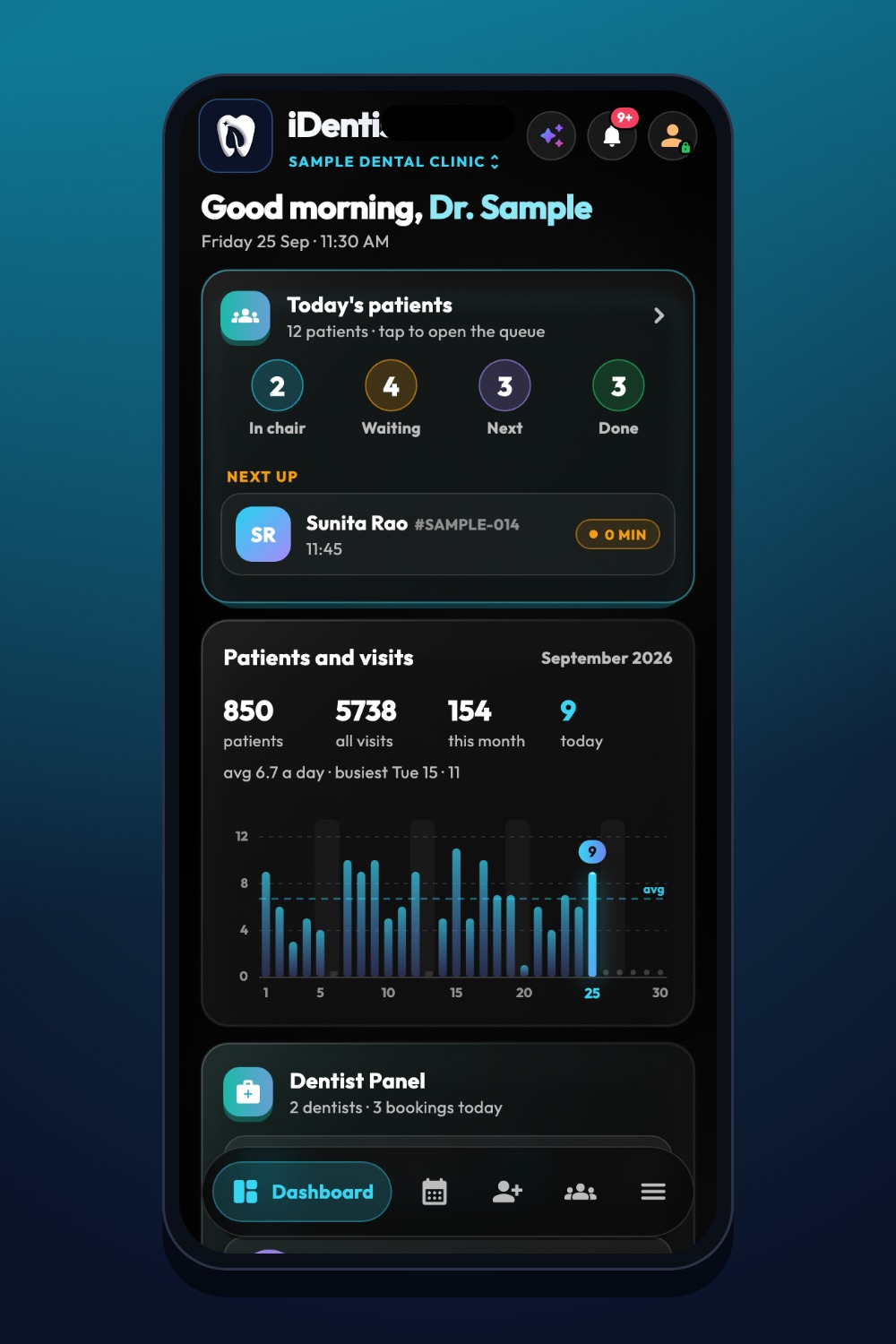
The real iDentist.Live screen, with demo data — no real patients.
Try it in iDentist.Live
In the free demo, pick a made-up patient with finished treatment and decide the next sensible review. See where staff would book it, how the patient would see it in the portal, and how a cancellation goes back into the schedule. Then measure kept reviews over a few months.
What to measure
Count recommended reviews that were booked, reviews kept, early cancellations, unanswered concerns, and patients who returned on time. Look at each type of appointment separately — one overall number can hide gaps.
Keep it honest
More visits are not automatically better care. Do not share clinical details over unsafe messages, and do not use rewards that could push treatment decisions. Call a habit “proven” for your clinic only when your own numbers show it.
Questions people ask
How often should patients come back?
It depends on each patient’s findings and risk, and should be agreed between the treating dentist and the patient.
What is the best first step?
Write down the recommended next step at every visit, and make booking or moving it easy.
Can patients see their next appointment themselves?
Yes. In iDentist.Live the patient portal shows their appointments, bills, X-rays and care advice.