
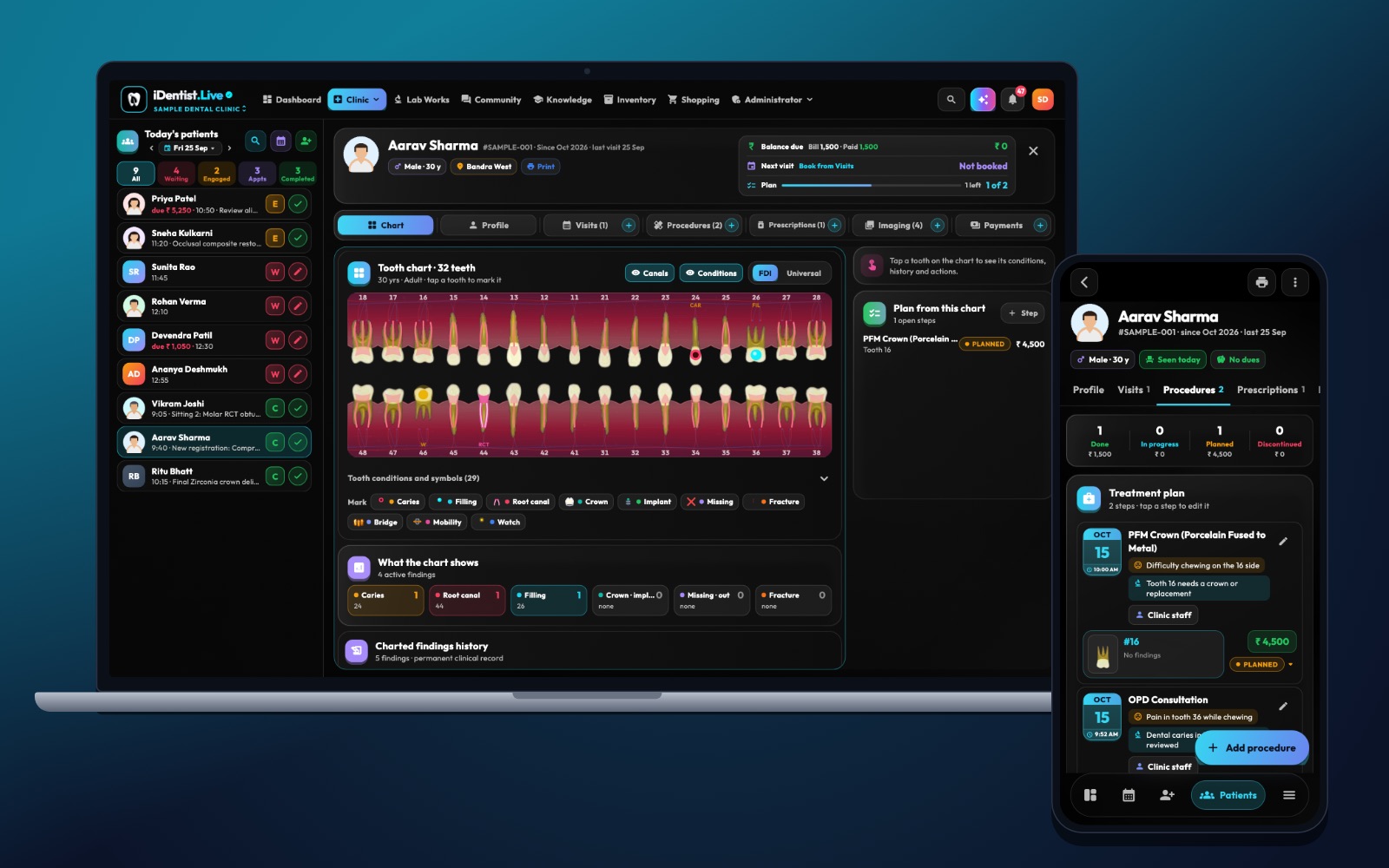
Patients say yes when a plan is easy to understand, clinically right and affordable for them. iDentist.Live helps the dentist bring the tooth chart, X-rays, procedures and the estimate into one conversation — so the patient’s consent is informed, never pushed.
Start with what worries the patient, show the finding, explain the reasonable options (including waiting), give an itemised estimate, check the patient understood, and record their decision without judgment.
Informed choice, not a sales script
More patients accept treatment when they can make an informed choice — not when a script pushes them towards a target. A good estimate links the finding to the available options, the number of visits, the likely cost, and what happens if treatment is delayed.
Record the decision honestly, even if the patient wants a second opinion. That is good care, and it builds trust.
Five steps to a clear estimate
- Start with the patient’s worry. Ask what matters most: pain, chewing, looks, time or cost. Repeat it back in plain words, so your explanation answers their real question.
- Show the finding. Use a labelled X-ray, the tooth chart or a drawing when it really helps. Say what is certain and what still needs checking.
- Explain reasonable options. Describe the treatment you suggest, other suitable options, and what may happen if nothing is done. Mention materials and follow-up where it matters.
- Itemise the estimate. Show visits, procedures, lab costs, a price range if you are unsure, when payment is due, and what could change the price. Keep money terms separate from consent to treatment.
- Check understanding and record the decision. Ask the patient to explain the plan in their own words. Give written information and time to decide. Record yes, later or no — without judgment.
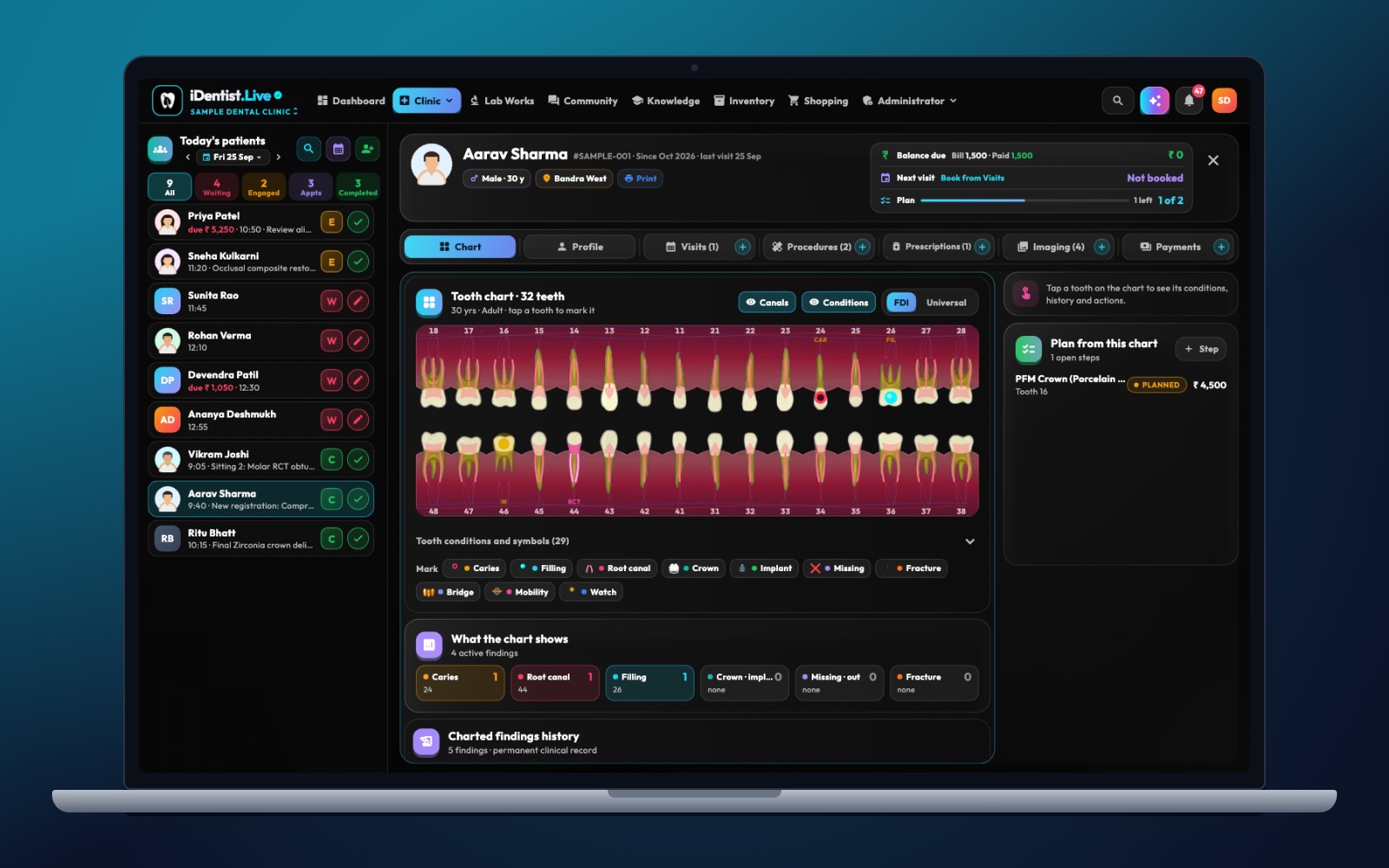
The real iDentist.Live screen, with demo data — no real patients.
How iDentist.Live helps
A plan is stronger when the dentist can move from the tooth on the chart, to the note, to the options and the likely bill — all in one patient file. In iDentist.Live the chart is not a separate picture and the payments view is not a separate ledger. Later, the patient can see selected information in their own portal. We would rather earn trust with clear options and honest prices than promise an acceptance rate no software can guarantee.
- Explain with the chart: the numbered tooth map keeps everyone on the right tooth.
- Keep options in context: visits, procedures and images support the explanation.
- Show the money clearly: billed, paid and advance in the patient file.
- Respect the choice: record yes, later or no; the dentist and patient decide.
A real example
For a heavily filled molar, the dentist explains the symptoms and examination, talks through a filling or a crown, and says what is still uncertain until further checks. The front desk gives an estimate with separate procedure and lab lines, the expected visits and a date to review the quote. If the patient wants to wait, the team records that choice and the warning signs to watch — the plan is not “lost”.
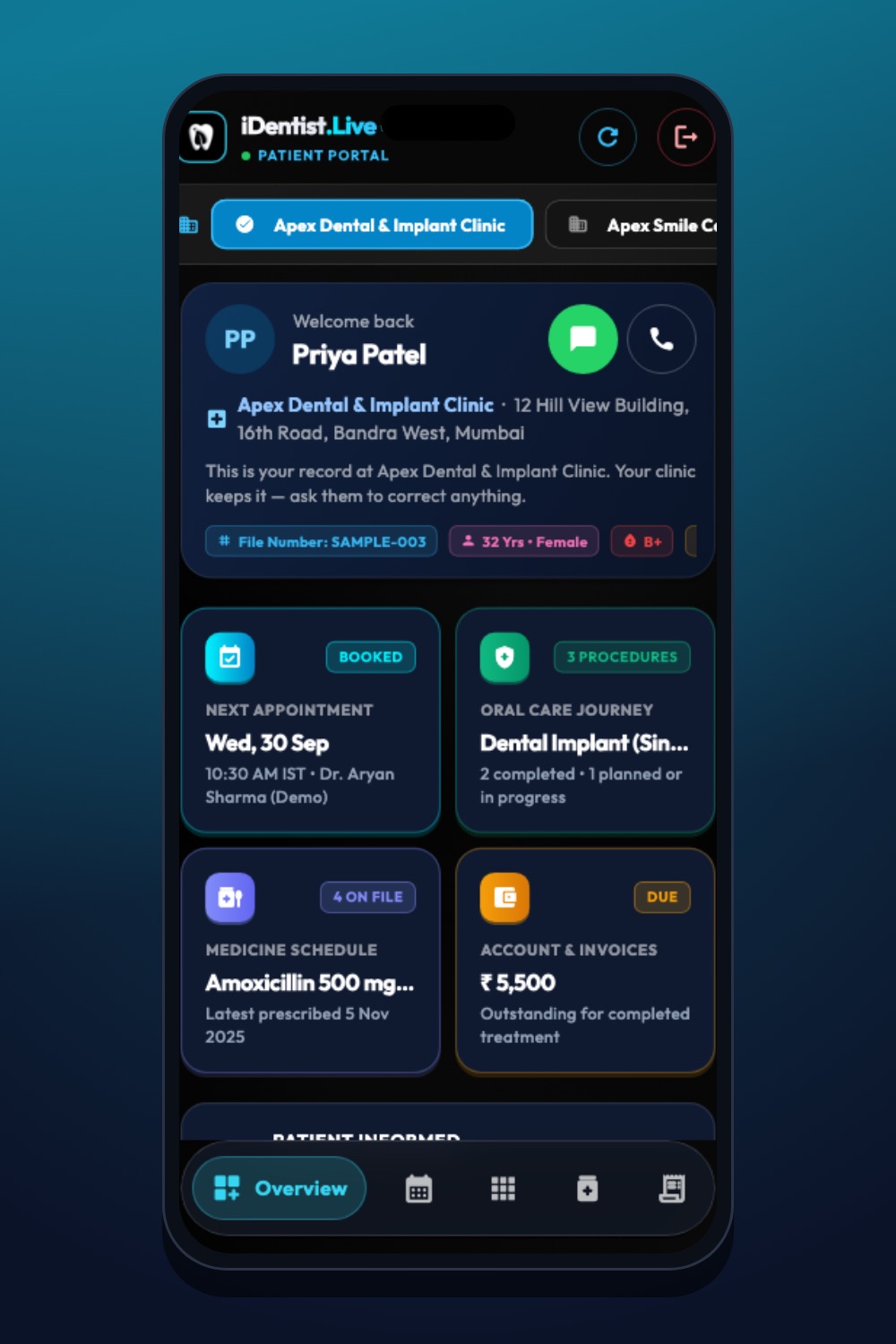
The real iDentist.Live screen, with demo data — no real patients.
Try it in iDentist.Live
In the free demo, choose a patient with a charted tooth and practise a two-minute explanation: what you found, what is uncertain, two sensible options, the likely visits and the estimated cost. Then check the written plan matches what you said. The screen helps — it never replaces examination or consent.
What to measure
Acceptance rate is plans accepted divided by plans presented in a set period. Also count plans delayed, second opinions and treatments started — each tells a different story. Look at case complexity and affordability, not just at which dentist presented.
Keep it honest
Do not chase a fixed “80% acceptance” goal, do not hide options, and never suggest that a loan approval is medical consent. Use before-and-after photos only with permission and honest context.
Questions people ask
Should the estimate match the final bill?
It should state its assumptions and when a clinical change might alter the price. Tell the patient about any change before going ahead.
Is a declined plan a failure?
No. An informed patient may wait or choose another option. Record the discussion and the follow-up advice.
Can the patient see their plan later?
Yes. In iDentist.Live the patient portal shows the information the clinic shares, like appointments, treatment and bills.