
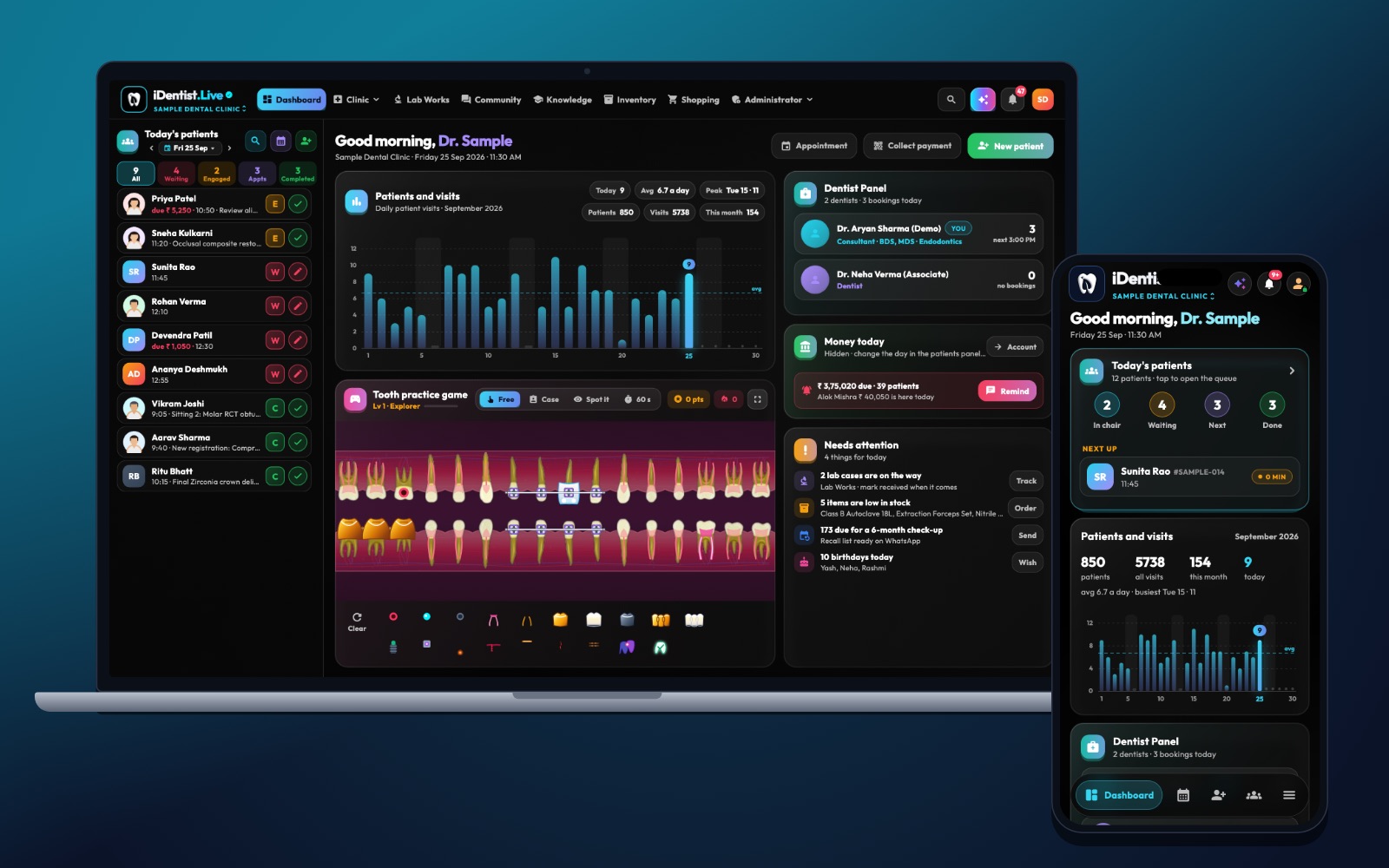
Dental education needs a safe patient record and a clear learning path at the same time. iDentist.Live puts the clinic’s patient file and the student’s knowledge workspace in one connected app — a solid base for a college to build its own way of working.
Register each patient once, assign cases on purpose, make supervisor approval a clear step, track each milestone separately, and close every case with feedback.
Care and teaching at once
A teaching hospital must look after patients and teach at the same time. A student case moves through registration, assessment, faculty review, treatment and follow-up — often across departments. The record must show the supervisor’s decisions clearly, give students useful feedback, and tell the patient who is caring for them.
Five steps for supervised cases
- Register once, link every visit. Keep one patient file across departments, with each visit’s date, department, student and supervisor.
- Assign cases on purpose. Match the case to the student’s level and the supervision available. Record who has the case, so no patient waits without an owner.
- Make supervision a clear step. Faculty approve the diagnosis, plan, consent and any procedure that policy requires — and the record shows who approved.
- Track milestones separately. Assessment, tests, approved plan, treatment visits, lab work, review and completion are different steps. A case is not done just because a quota entry was made.
- Close the learning loop. Give feedback on reasoning, technique, communication, infection control and record quality. Remove identifying details when cases are used for teaching.
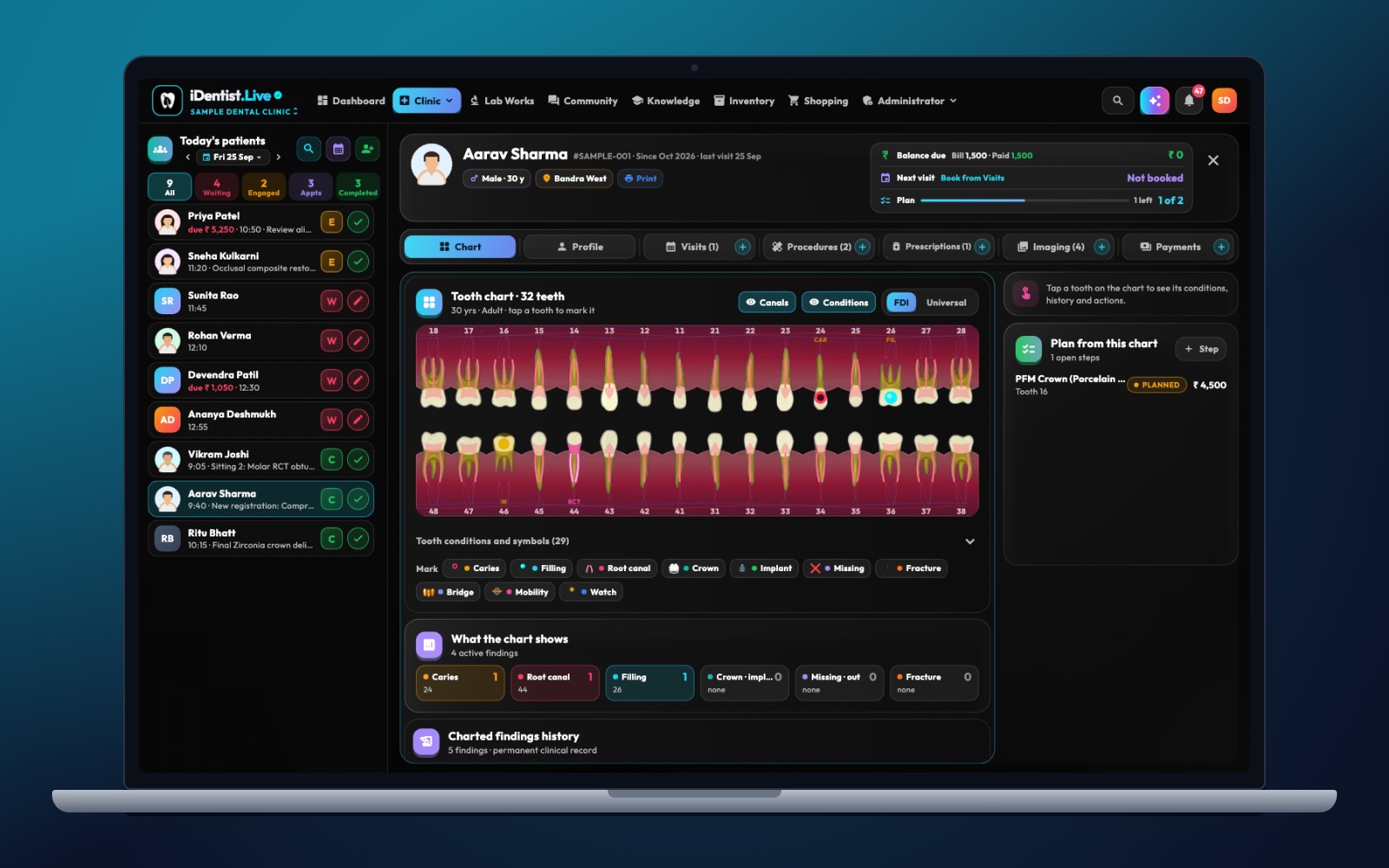
The real iDentist.Live screen, with demo data — no real patients.
How iDentist.Live can help
iDentist.Live is built around separate workspaces and roles, not one shared login. The clinic workspace holds the patient’s chart, visits, procedures and X-rays; staff are added by their own mobile number with a role; the student workspace gives organised learning material. A college can use these today and agree its own approval checklist. There is no separate “teaching hospital” module yet — so check the workflow with your institution before using it with real students.
- One patient file that stays complete across rotations.
- Each person signs in as themselves, with the right role.
- The student library and knowledge base for preparation before a session.
- Free core tools, with no limit on patients or cases.
A real example
A student assesses a patient with a complex prosthodontic need. Faculty change the proposed order and ask for a periodontal opinion. The record keeps both the student’s first plan and the approved one, shows who asked for the referral, and the patient knows the next visit. Credit follows documented care, not an unchecked procedure count.
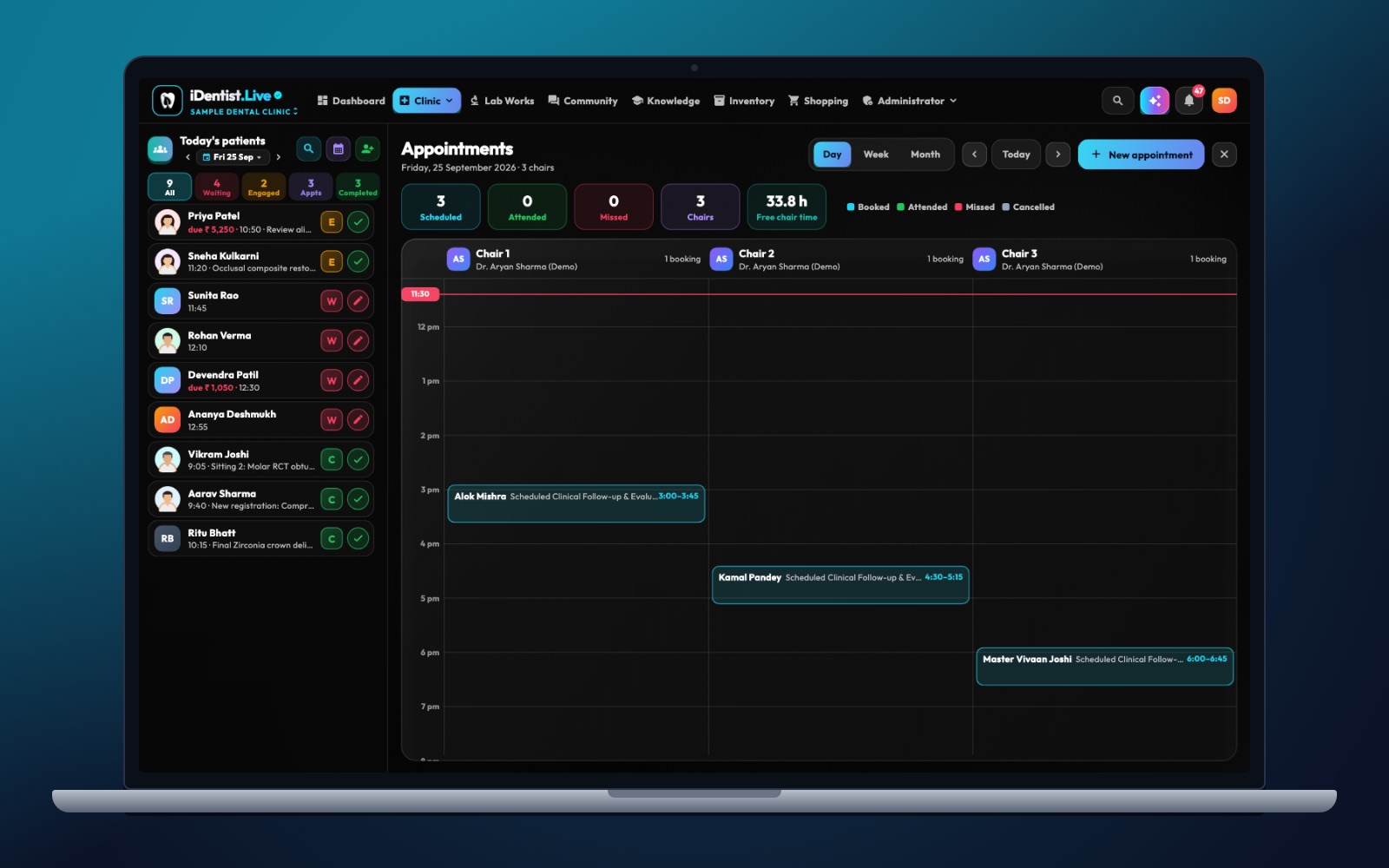
The real iDentist.Live screen, with demo data — no real patients.
Try it in iDentist.Live
In the free demo, follow one made-up patient in the clinic, then open the student library and find material for that case. Draft a checklist for faculty approval of diagnosis and plan, and agree it with your institution before any live use.
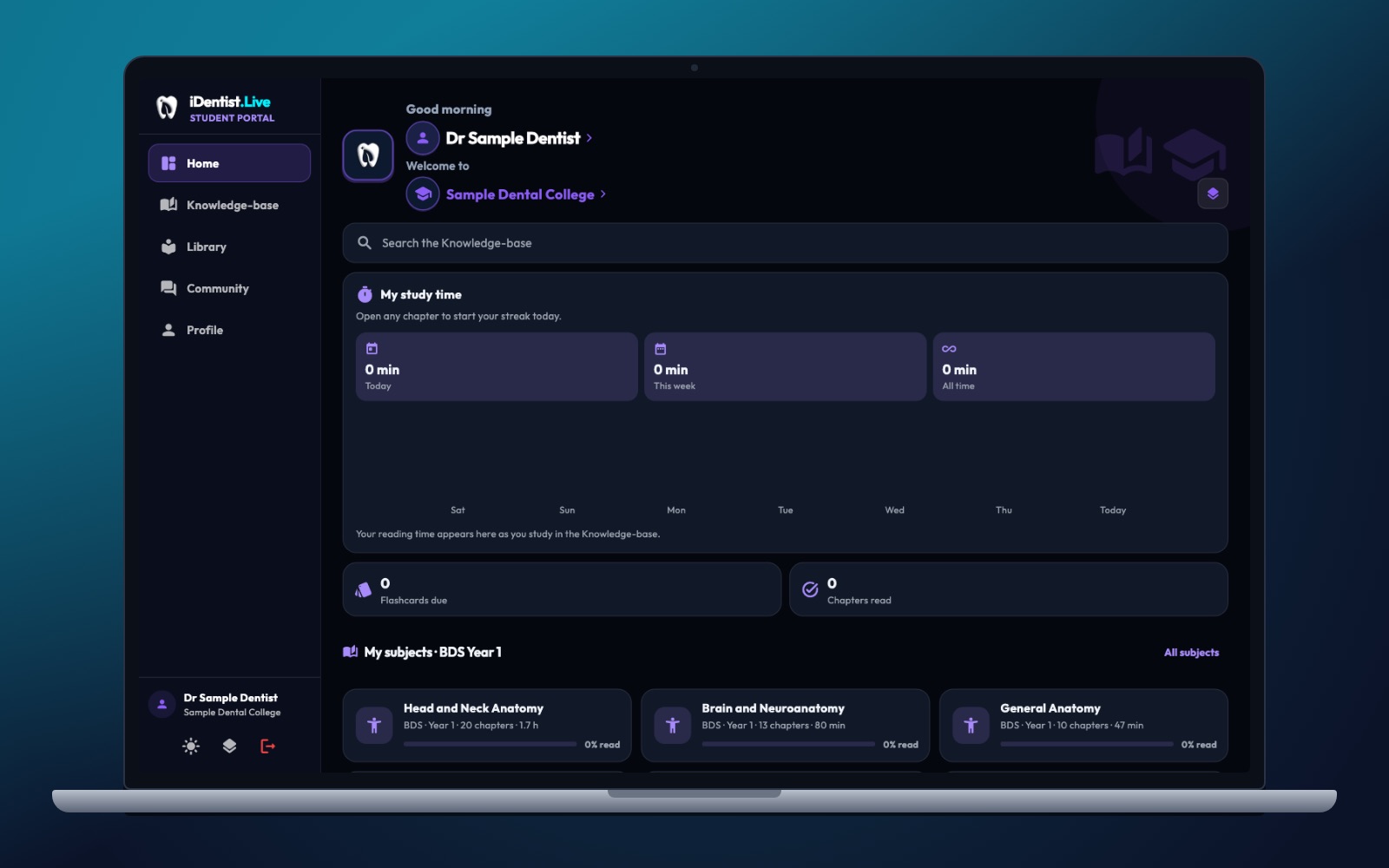
The real iDentist.Live screen, with demo data — no real patients.
What to measure
Time from registration to faculty review, cases waiting for approval, overdue follow-ups, incomplete records and patient feedback. Measure quality and supervision, not only numbers of cases.
Keep it safe
No shared supervisor logins, no sign-off without examining the patient, and no “completed” cases while the patient still needs review. Teaching rules differ between institutions — set your workflow to match yours.
Questions people ask
Can a student’s draft plan be kept in the record?
Yes, if it is clearly marked as a draft and kept apart from the supervisor-approved plan.
What should a teaching-floor view show?
Who is waiting, which student has the case, its stage, what the supervisor must do, the next appointment and overdue follow-ups.
Is there a special college module?
Not yet. Colleges can use the clinic and student workspaces with roles, and agree their own checklist.