
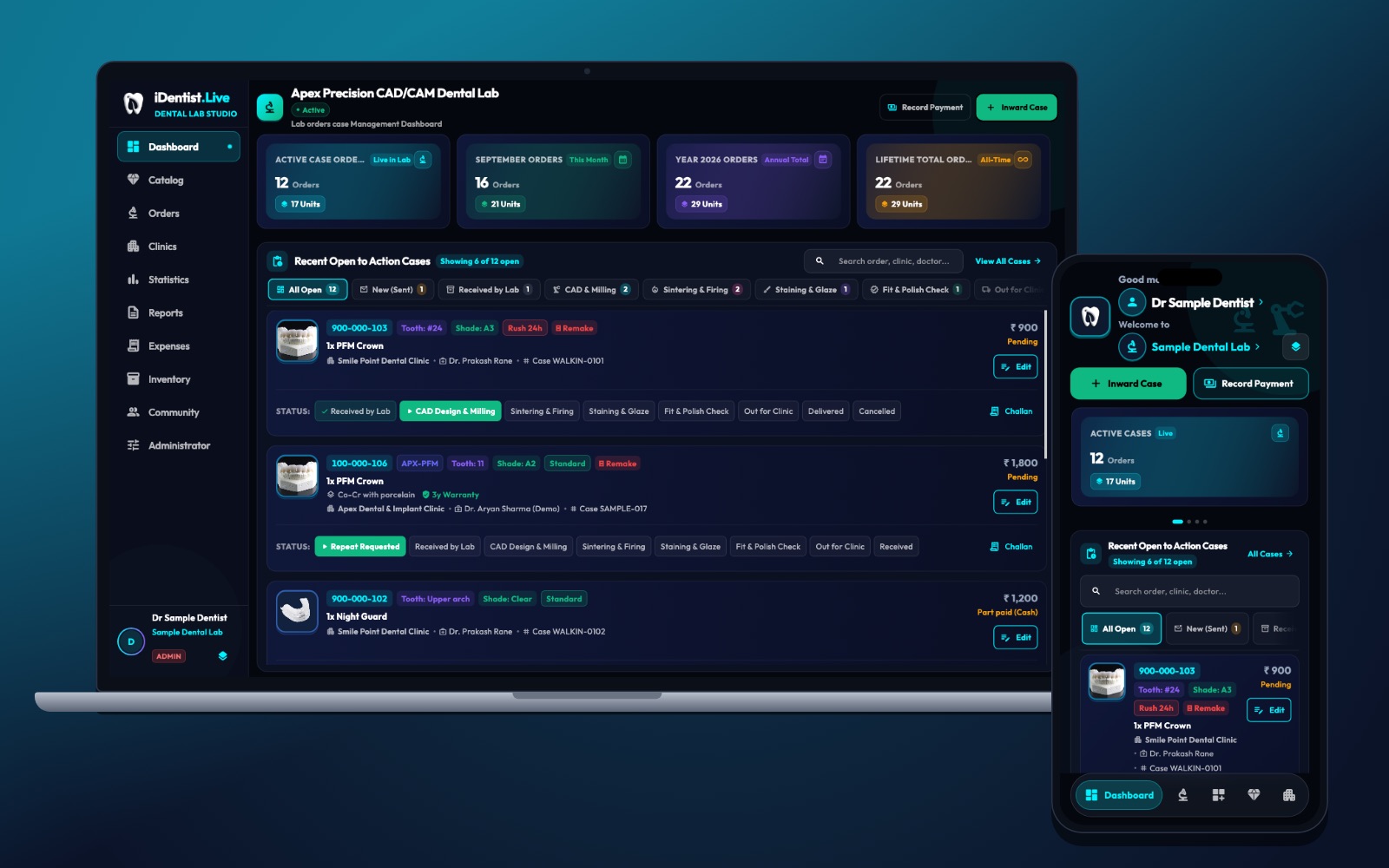
A lab cannot get faster by promising every crown the same number of days. iDentist.Live’s lab board shows the real path of each case — accepted, milling, firing, finishing, dispatch — so you can see where time actually goes.
Define when the clock starts, map the steps for each material, plan around your real bottleneck, check quality at each stage, and tell the clinic early when something changes.
Turnaround is the whole journey
Turnaround time is the full journey from a complete, accepted case to a restoration ready to fit. Zirconia, porcelain-fused-to-metal (PFM) and lithium disilicate (e.max) take different paths. But every path depends on clean input, realistic planning and timely quality checks. A fast mill cannot win back days lost to an unclear margin.
Five steps to faster, reliable turnaround
- Define the clock. Record when a complete case is accepted, the promised dispatch date and the real dispatch. Keep time spent waiting for answers separate from production time.
- Map each material’s path. Zirconia usually needs design, milling, sintering, finishing and a quality check. PFM has framework and porcelain steps. Lithium disilicate may need pressing or milling and crystallisation. Follow the maker’s process.
- Plan around your bottleneck. Schedule scanners, designers, mills, furnaces and skilled finishing time. A free machine without a technician or material is not real capacity.
- Check quality at each stage. Check design, contacts, bite, shade, surface finish and case labels at the right point. Fixing a problem before dispatch is cheaper.
- Tell the clinic early. If a scan fails the check or a furnace breaks down, tell the clinic the impact and a new date. Note who agreed to the change.
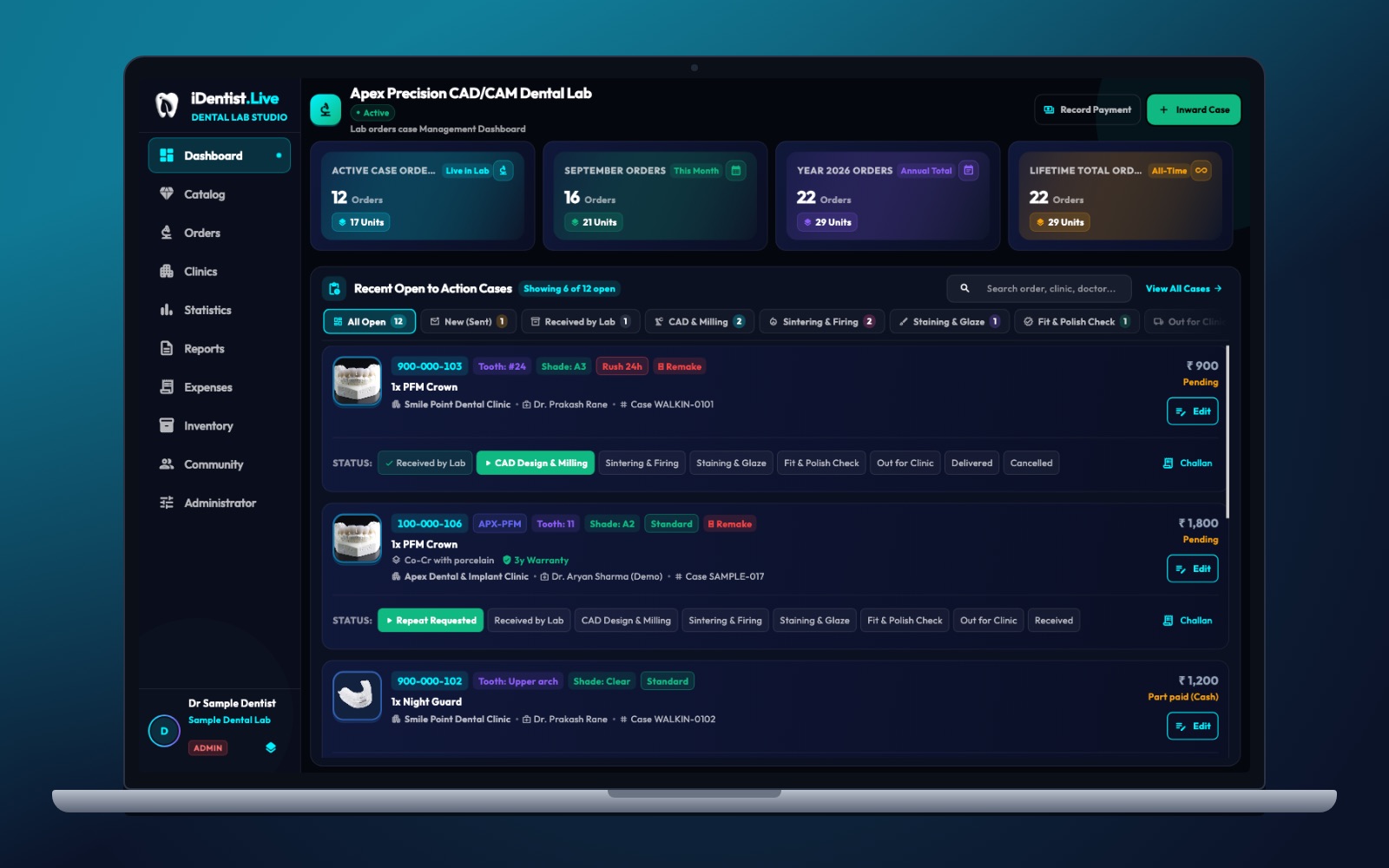
The real iDentist.Live screen, with demo data — no real patients.
How iDentist.Live helps
The lab board shows open work, each order’s stage and the details a technician needs at the bench. That makes better conversations with clinics possible: was the scan complete? Was the shade missing? Is the case waiting for design approval, furnace time or pickup? The clinic sees the same order, so a new date is based on a real stage, not a guess.
- A board with real stages instead of one vague “processing” label.
- Tooth, shade, material and urgency at a glance, to set priorities.
- Clinics follow the order instead of chasing updates on chat.
- Free, with no charge per order.
A real example
A lab promises five working days for a zirconia crown after the scan is accepted. The scan arrives on Monday but the margin needs a question answered. The dentist replies on Wednesday, so the clock starts then. Design and milling happen Thursday, sintering and finishing Friday, the quality check Monday and dispatch Tuesday. The lab reports both the waiting time and the production time, so nobody misreads the result.
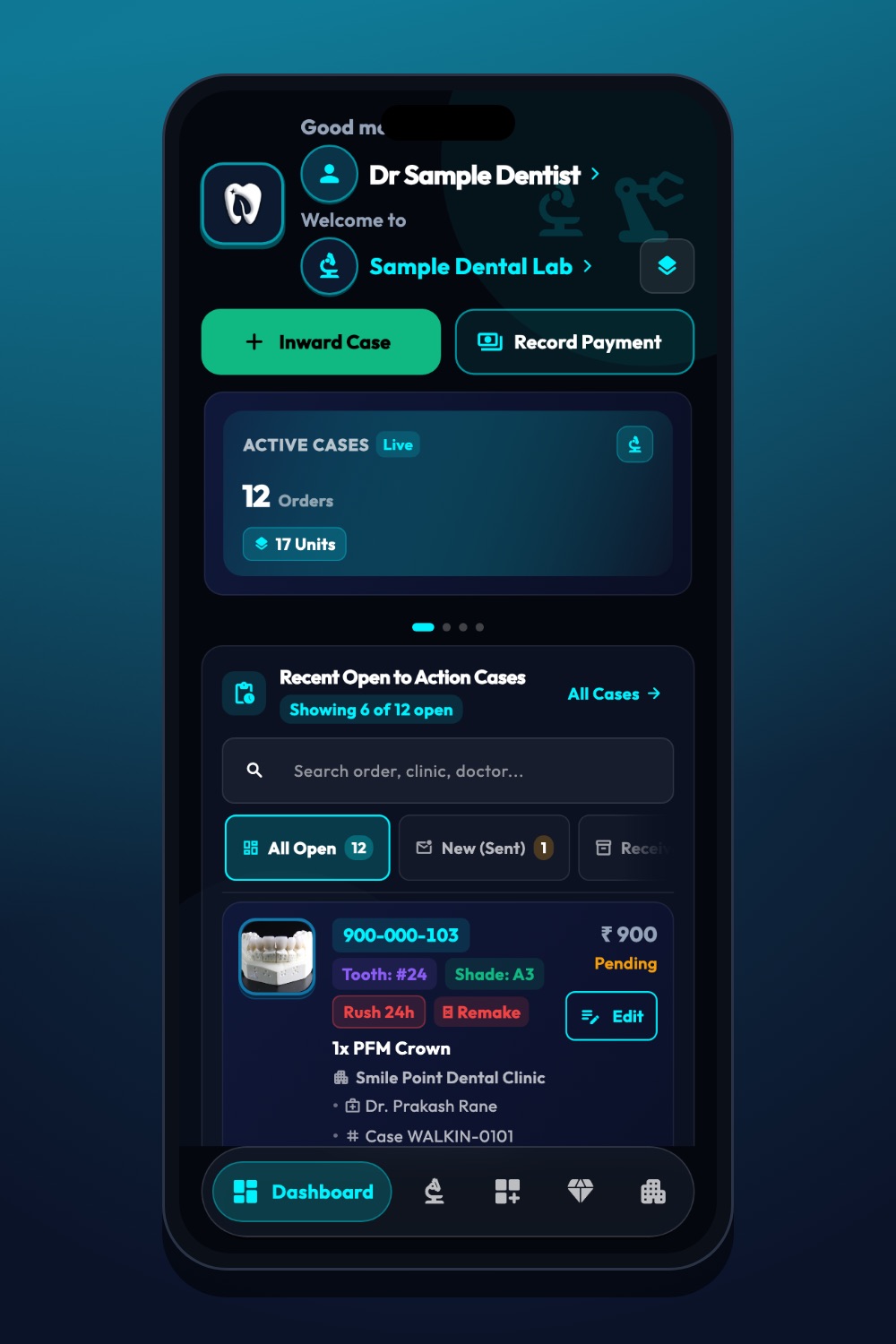
The real iDentist.Live screen, with demo data — no real patients.
Try it in iDentist.Live
In the free demo’s lab board, find cases that are new, in CAD and milling, and out for the clinic. For each, ask what must happen before the next stage. Note a pretend acceptance time and dispatch time, and separate waiting time from production time. That is more useful than one average for all materials.
What to measure
Compare typical and slowest turnaround by material, on-time dispatch, rejected cases, time waiting for answers, remake rate and machine downtime. Use the same clock rule in every report.
Keep quality first
Do not advertise one turnaround for every kind of case. Never rush a maker’s curing or firing steps to hit a deadline. And a scan that was “sent” is not yet a complete, accepted case.
Questions people ask
Which material is fastest?
There is no single answer. The process, case difficulty, lab capacity and the quality of the scan or impression decide the real time.
How can clinics help labs be faster?
Send complete scans or impressions, shade and design notes, a realistic fitting date, and quick answers to questions.
Can clinics see the stage of their case?
Yes. Clinics follow each order’s stage from their Lab Works page in iDentist.Live.